

My Steam Deck and recent desktop PC upgrade have turned me into a certified PC Gamer™, and with that, trying out some new games that weren’t on my radar back when I had a pretty weak laptop. Of note, I turned my attention to The Elder Scrolls V: Skyrim after grabbing it on sale. I didn’t initially have any vested interest in the Elder Scrolls series, but the combo of having read a lot of high fantasy books during the past six years (ranging from classics like The Lord of the Rings to contemporary authors of varying subgenres, such as Joe Abercrombie and Terry Pratchett) and wanting something lengthy to chip away at on the Deck pushed me to try something different.
Skyrim is not my first open-world RPG, but the game’s structure was not what I was accustomed to. Plenty of modern high-budget JRPGs have been leaning into an open-world format, like Tales of Arise’s ease of fast travelling between different countries for sidequests and Final Fantasy XV’s road tripping in Eos. These games still tend to be structured with clear delineations between main story quests that push the plot forward and a plethora of sidequests to be done at the player’s desires. Skyrim…also follows this structure, technically, but the game doesn’t make it immediately obvious if certain quests are contributing to the main plot or are simply part of the dozens and dozens of potential side romps across the continent. There’s a statistical count in the menu for the number of completed main story quests, but the game won’t give the player an always-on marker showing how to progress to the next quest. After the on-rails “hey you, you’re finally awake” opening and the player’s arrival at the starting town of Riverwood, Skyrim takes a hands-off approach and leaves the player to their own devices.

The wide open-world structure of Skyrim, and Elder Scrolls games in general, was daunting given previous JRPG experiences. Fortunately, Riverwood serves as a tutorial for the various services offered in later towns, from smithing weapons and armor to chatting up with NPCs to perform some basic quests. Traveling beyond Riverwood and kickstarting the game’s story in the central hub city of Whiterun is where things get interesting. Traversing Skyrim’s terrain on foot (and later by horse) is a particular feeling, thanks to the combination of the game’s gentle instrumentals, nature sound effects, and often gorgeous terrain (when the limitations and age of the engine aren’t immediately obvious). Sure, wild bears, spiders, vampires, and assassins may occasionally burst out of the fauna, but a soft snowfall through the plains or peering at the starry night sky on the mountains en route to a destination simply feels nice. I’ve become the type to pop on a podcast the moment things get quiet or necessitate grinding, but Skyrim is one of the few exceptions where being present in the game’s environment is its own pleasure.
Another facet of Skyrim’s flavor of open-world structure is how the game facilitates exploring. It’s easy, and practically expected to get distracted by something while traveling to waypoints. Typically, this involves stumbling upon caves, bandit hideouts, or dwarven shrines. Some NPC’s may hint that these locations exist, but it’s more fun to take detours to these locations organically. The sidequest-exploration loop of Skyrim is easily the most addictive and dangerous aspect of the game, and I understand why people can put hundreds of hours across months or years in an ES game while barely touching the main story. It helps that quests expand on various characters and general lore that is more interesting than the main plot. In particular, I was attached to the Companions, a warriors’ guild of werewolves who are present in the aforementioned Whiterun. Their quest line runs the gamut of proving yourself worthy of joining their ranks to taking revenge on behalf of their former leader after his untimely death. The Companions’ storyline is a small part in the grander narrative of Skyrim, but it’s nonetheless pleasantly formative, especially in the early parts of the game.The main story focusing more on a mildly generic “reborn chosen one has to save the world” is less interesting than looting dungeons trying to find a local villager’s lost goods.
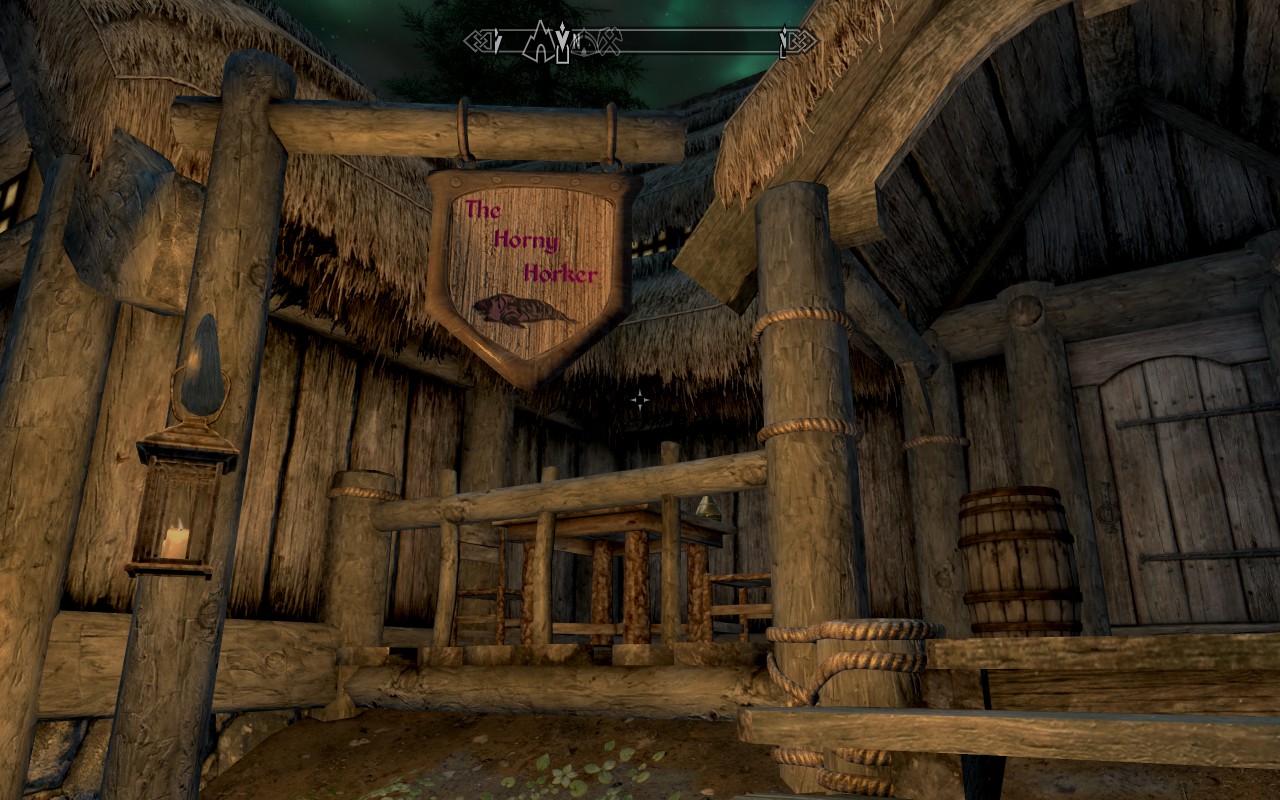
Thanks to my hoarding tendencies (which the game tries to limit unsuccessfully thanks to my habit of dumping treasure onto my travel companions), it was easier to acquire large amounts of gold that soon went into the purchase of a house in Whiterun. Since I typically used Whiterun as my preferred ‘base town’ in the game, buying the Breezehome house near the front of the village was an easy decision. While resting in Skyrim isn’t mandatory, there’s still something nice about having an actual home in a town to furnish and return to between questing sessions. Thanks to the Hearthfire DLC baked into the Special Edition, I was also able to adopt a couple of street orphans who mind the household in exchange for sweetrolls and gold I looted off dead bodies. The intended use of the house is extra item storage and a place for the spouse and followers, but it adds an unexpected layer of coziness to an often brutal game. I ended up spending a lot of time as a glorified jewelry seller as a side hustle solely so I could buy more houses to decorate.
I did choose to mod the game off the bat with mostly unofficial patches to quash bugs, improve textures and scenery, and, most importantly, have some extra Khajit traveling companions. Apparently, lore explains the lack of Khajit marriage candidates in Skyrim (the ones in the country are implied to be travelers who may not want to settle down in a foreign land), which is a shame since the Khajit Will Follow mod is pretty fantastic. I ended up recruiting Bikhai, a warrior seeking to join the Companions, and Ma’kara, a dual-wielding fighter, early on in the game, and they enhanced much of the travel experience. The mod is in-depth enough to give the new followers lots of context-sensitive dialogue, such as Bikhai complaining about the lack of ‘friendly’ monsters deep in an ancient dungeon, or Ma’kara noting the general abundance of Nords across Skyrim’s landscape. While the vanilla followers like bodyguard Lydia or ancient vampire Serrana are interesting enough, the mod companions’ extra dialogue make them feel more dynamic in my ragtag group of adventurers. Wandering the continent’s landscape is more fun with friends.

The wildest aspect of my Skyrim experience is how the game changed my preferred playstyle in action games. ES games in general offer different weapons for different play styles – you can be a run-of-the-mill melee fighter or a ranged mage with the ability to cast fire or summon monsters, etc., etc. There’s a particular meme that every Skyrim player eventually becomes a stealth archer at some point, which is exactly what happened to me. I find stealth in video games to be tedious, and generally opt to be brash and deal with enemies head-on. But there’s something about stealthing in Skyrim that feels satisfying. Perhaps it’s because stealthing also allows me to listen in on bandits conversing around corners and taking heed of enemy sounds that penetrate the environment’s ambience. Or, maybe, it’s because high stealth levels combined with archer mastery means that I can wipe out enemies in one or two hits with a well-time arrow. Actual melee combat in Skyrim tends to be pretty clunky, so stealth killing enemies from range is surprisingly optimal.
Skyrim has been a different type of gaming experience, but in a good way. It’s a lot like trying a new special at a favorite restaurant that’s seemingly out of your wheelhouse, and enjoying it because it’s so different from your usual. Skyrim encouraging me to stop and smell the literal and figurative flowers rather than rushing through a list of quests allowed me to soak in the game’s environments and simply vibe.
 Oddity Games
Leave a comment