
While Guru Logic Champ has been compared to Picross (and other nonogram-based games) due to being mechanically similar and involving filling in an image, GLC feels like a different beast . Two Champs control a cannon to fire and suck up a limited number of blocks from the grid. The grid can be rotated 180 degrees in either direction, with the goal being to maneuver the blocks into marked spaces. This typically requires some planning and experimenting to find viable spaces to set blocks or creating temporary walls to carefully maneuver blocks into the correct places. You can take as long as you need to finish individual puzzles, though the stages do keep timers in case you want to replay stages to improve completion times. The game is framed with a cute and funny art style, minimalistic on text and instead telling its story through short animated sequences between major stages. It’s a wonderful pick-up-and-play puzzle title that’s great for long and short gaming sessions.
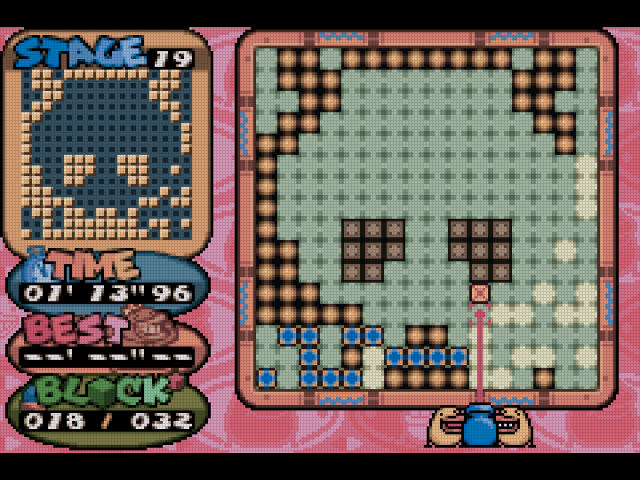
While Compile sadly shuttered not long after the release of Guru Logic Champ, D4 Enterprise Publishing created a sort-of successor DSiware called Snapdots, which focuses on helping an alien girl instead of a bunch of cartoon ducks. Curiously, PopCap of all developers, also made a short-lived clone called Pixelus.
Hatena Satena
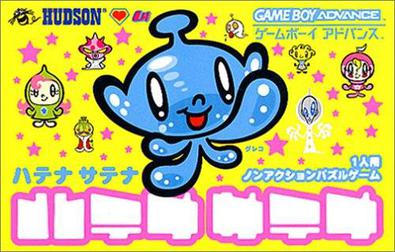
Hatena Satena is a funky sci-fi themed Picross-adjacent game from Hudson Soft. The game’s cutesy art syle is thanks to Framegraphics, the iconic early 2000’s art studio founded by Hideyuki Tanaka, of Bust-A-Groove and Super Milk Chan fame. As far as I can tell, however, Tanaka was not directly involved with the development of Hatena Satena. There don’t seem to be rough translations of the game’s dialogue, but from context, it seems to involve helping out aliens.

Hatena Satena follows similar structures to nonograms, but uses color swatches instead of numbers. The horizontal and vertical axes indicate how many blocks of color need to be filled in each row and column. The gameplay is comparable to the Voltorb Flip minigame from the Pokemon HeartGold and SoulSilver releases from certain territories, intended to replace the in-game slot machines. Both Voltorb Flip and Hatena Satena involve pattern logic work to mark the correct tiles. Stages are timed and the player is given a certain amount of errors they can make per puzzle. Successfully filling in consecutive tiles of the same color will result in a fun animation of your little alien buddy and the game will autofill multiple tiles. I am interested in the game’s story, especially since there are side-modes that involve hanging out with specific characters, so hopefully someone will make a fan translation in the future.
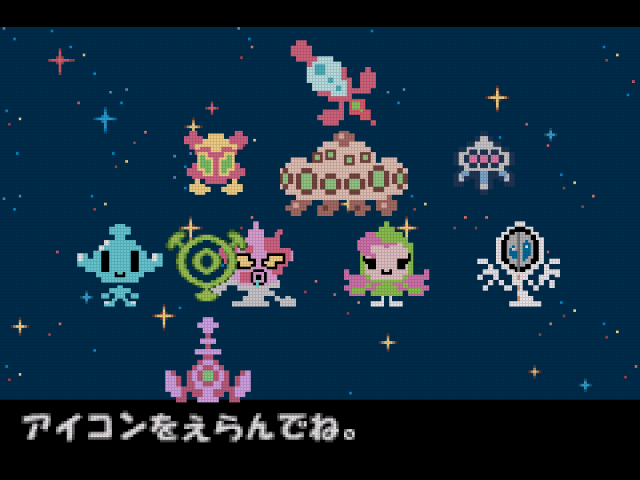
Surprisingly, unlike Guru Logic Champ, Hatena Satena hasn’t inspired a bunch of gameplay clones. Indie game Across Stitch seems to be closest as a logic puzzle using colors.
bit Generations – Coloris

The bit Generation series are a set of different standalone games primarily developed by Skip Ltd. (Chibi-Robo) and one title created by Q-Games (PixelJunk series). There were seven games in total, released on fancy black GBA cartridges with sleek minimalist packaging. Tentative ESRB ratings were given to the games and their logos were given sticker cameos in Super Smash Bros. Brawl, but an official English release wouldn’t manifest for a few of the games until they got re-releases for WiiWare and DsiWare as the Art Style series.

The bit Generations games vary in gameplay, from the tricky gravity manipulation of Orbital to the unique audio-based navigation of Soundvoyager. Ultimately, the game I ended up fixated on the most was Coloris. On the surface, Coloris is a basic match-three game based on colors. However, rather than manipulating rows and/or columns, the player focuses on changing the colors of tiles on a hue spectrum to match tiles. Yes, the game is as colorblind-unfriendly as it sounds, but it’s a fun and different take on the typical match-three puzzle formulas. The addition of the soft xylophone-esque sound effects and the satisfaction of pulling off matching color combos is good, relaxing fun despite the simplistic visuals.

Unfortunately Coloris was not among the bit Generations games to get ported as part of the Art Style series and I’ve yet to see a match-3 game that clones its gameplay.
As I’ve been digging through the GBA’s game catalog for retro oddballs, it was fun to find some lesser-known puzzle games as a break from my usual RPG romps. I highly recommend dipping into any of these games for a good time.
 Oddity Games
Leave a comment