
Picking up a dedicated portable emulator opened up a massive well into retro gaming, but more importantly, the Pokemon ROM hack scene. I started my Pokemon journey back with the GBA (as a dumb kid, I didn’t realize that the GB/C games were backwards-compatible with the GBA), so those games have a special place in my heart, even though I think later entries (the DS games specifically) finessed and updated the general Pokemon formula. However, I’ve also replayed my copies of Ruby and FireRed enough times that I’m completely sick of the games. Enter, the Pokemon ROM hack scene.
Pokemon ROM hacks have been around in some form since the 90’s according to Bulbapedia, with Koolboyman’s large-scale hack Brown being particularly well-known. Additionally, Drayano60’s varied difficulty hacks, such as Renegade Platinum, popularized difficulty-based hacks. From some information shared on the Pokemon ROM hacking subreddit, ROM hacking has become more accessible in recent years thanks to the wider variety of hacking tools, as well as the decompilation project for the ROMs themselves. Incidentally, the lack of hacking tools was a major reason why the DS-era games primarily only had difficulty hacks. Most ROM hacks are for the mainline games, but there are also hacks available for the GB TCG games and a blossoming community working on the Mystery Dungeon games. Incidentally, ROM hacks are separate from fan games, which are usually made in RPG Maker to enable developers to create more ambitious features without being tied to the base games’ limitations.

ROM hacks tend to be weighty projects, moreso if the developer(s) are creating custom regions and characters or troves of Fakemon. The projects are generally done by independent hobbyists or small teams, and the hacks’ quality can vary – it’s not uncommon for difficulty imbalances, mapping issues, or other bugs to be present. It needs to be emphasized that these projects are volunteer-based, since financially benefiting off the hacks risks the wrath of Nintendo. Speaking of which, there’s also always the risk that Nintendo might swoop in at any time with a C&D hammer. Allegedly, Nintendo’s legal team is very aware of ROM hacks, but avoids getting too over involved due to bad PR, even if they’re in the right to protect their IP.
Despite the issues that come with ROM hacking, and the many, many unfinished or perpetual WIP projects, the ones that do meet completion are often surprisingly good.
Quality of Life hacks are hacks that focus more on mechanical fixes to the games. These range from being minimal and focus on fixing existing bugs or imbalances (especially in the original RBY games) but there are also more maximalist hacks that backport features from later generations, like the Fairy type, the physical/special split for individual moves, and even Pokemon themselves. QoL hacks are a godsend (Arceussend?) for people playing on emulators, since even the more minimalist ones also make all the Pokemon available for catching/evolving without having to trade. As a child who grew up in an isolated suburb without nearby Pokemon friends, these features would’ve blown my mind. Unless you’re a stickler for purism, the minimalist QoL hacks are the ideal way to play older Pokemon games for the first time.
(Difficulty hacks technically fall under the QoL umbrella and also make up a significant amount of Pokemon ROM hacks in general. I don’t care about the meta-competitive aspect of Pokemon, so these hacks are not interesting to me and I won’t be discussing them, but they are out there for those inclined.)
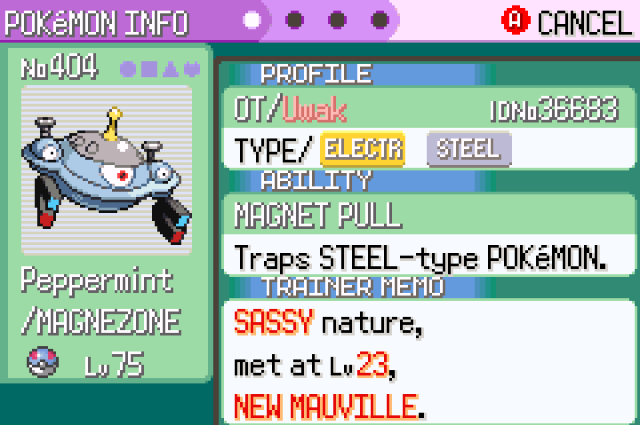
For example, with Emerald sharing 90% of its DNA with the original Ruby & Sapphire, I was looking for a fresher experience that was closer to a vanilla QoL hack rather than an ostentatious feature-packed beast. Also, I was tired of waiting on Nintendo to drip feed the game onto the NSO service. Modern Emerald adds some good QoL mechanics, like the aforementioned physical/special split, fairy type, following Pokemon, and some later gen evolutions and moves for existing gen 1-3 species. The hack even has a quick ‘run from battles’ feature that surprisingly hasn’t been used in more hacks. Overall, Modern Emerald hit a reasonable sweet spot, feeling closer to the original experience with some nice extras to break through some of the game’s lack of a clearer “Pokemon third version” tedium.

Crystal Clear, on the other hand reimagines Crystal as an open-world game, with the player able to choose any major city in Kanto or Johto as their starting town and do the gym challenge in any order. I started in Blackthorn city, which allowed for fighting Clair off the bat and generally picking off the more annoying gym leaders first. The game also auto-scales trainer levels accordingly with progress. There are some imbalancing issues with CC, like how easy it is to chew through low-level trainers, run out of general trainers to fight, and end up grinding against gym leaders (thank goodness for emulation fast-forwarding). The creator’s integration of himself and his developer pals in-game was also a bit masturbatory, as he used them to replace the Elite Four + Champion, rather than making them easter egg encounters. Regardless, CC was still a fun romp through Johto and made me more interested in open-world hacks.
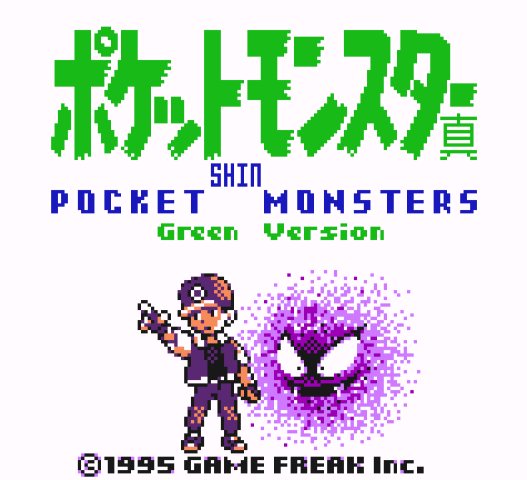
In the future, I plan to take a spin through hacks like Shin Pokemon Green and Polished Crystal, which purport to re-balance some of the jankier parts of the Gen 1 and 2 games, respectively. I have a bit of an issue re-visiting the GB/C Pokemon games, since those games are more noticeably buggier than the gen 3 games, but these QoL hacks seem like good compromises. I’m also keeping an eye on Pokemon R.O.W.E., which roughly seems to be the equivalent of Crystal Clear for Emerald, but promises future integration with FireRed for a seamless open-world experience. I’m also debating trying Emerald Rogue, a roguelike hack with the later gen features and adjustable difficulty.

Custom region hacks are the more ambitious ROM hack projects and almost always require the work of a small team due to their scale. These hacks generally include a new region and original story/characters, with some going the extra mile to include original Fakemon. These hacks tend to be a lot more prone to certain gameplay balancing issues, but they can boast the aforementioned QoL features and generally explore unique narratives.
Unbound is a massive reskin of FireRed with a unique engine created by the developer that enables the game to utilize battle mechanics from later generations, like mega evolution and gigantimax battles. The game even has a full custom soundtrack, an expansive sidequest system, original minigames, and Pokemon from up to gen 8. There are even custom shinies for certain Pokemon, like Electivire, that had bland shinies in the vanilla games. Unbound is one of the few massively ambitious ROM hack projects to not only be developed to completion but to boast a massive amount of things to do. Seriously, it’s easy to get sidetracked with the game’s expansive quests, not to mention the post-game is chock full of extras. The only major complaint I have with Unbound is that the story is dry and overly-serious and most of the NPCs are lacking a particular charm that mainline Pokemon games usually have. Still, Unbound was really fun and shows what ROM hacks can accomplish if they can meet their development goals.
Prism is another reskin hack, this time for Crystal, and the developer is the same individual who created Brown. Technically, that means Prism is a sequel to Brown, but it isn’t mandatory to play Brown. Unfortunately, Koolboyman got C&D’d by Nintendo shortly before releasing Prism, but the game was leaked anyway and development was taken over by another team. Admittedly I’m not too far in Prism, but so far I’ve enjoyed what I’ve played. In Prism, the player takes the role of Elite Four member Lance’s son/daughter and ends up in the new region of Naljo. There are 20 badges to collect, crafting abilities, new types, and the ability to manually control the Pokemon themselves in certain areas. There are some noticeable world map sizing issues and I recommend utilizing the online documentation to verify what Pokemon and items are available in certain areas, but so far Prism has been promising.

Amidst the black hole that is my gaming backlog, I also have my eyes on FireRed: Rocket Edition, which turns the tables and allows the player to rise through the ranks of Team Rocket and build teams by stealing trainers’ Pokemon. There’s also some ‘older’ reskin hacks like Glazed and Gaia with new regions to explore and teams to build. I’m also eagerly awaiting the gorgeous Gen 2 reskin Coral and the medieval Crown, with its custom battle system.
I enjoy ROM hacks for a variety of reasons, but primarily because they hit a good middle ground between old gen nostalgia with modern features and fresh experiences. ANN columnist Jean-Karlo Lemus describes a certain subset of Pokemon “fans” as individuals who don’t want to admit that they’ve outgrown Pokemon and want to endlessly badger Game Freak for not making a triple-A budget open world version of the games aimed explicitly at older players. To a certain extent, I think these people also push the creation of ROM hacks, especially the ones who make the sadistically hard hacks made for the metagame nerds. At the same time, I’ve also seen people who admit that ROM hacks got them back into playing Pokemon in general. Pokemon ROM hacks are so varied that they can offer particular compromises to players looking for different things, ranging from new challenges to the general experience of exploring a new region or raising different teams. In this way, ROM hacks occupy a particular, valuable niche, and I plan to keep playing them for years to come, alongside my regular replays of the vanilla games proper.
 Oddity Games
Leave a comment