Environmental storytelling is a term experienced more by example than definition. For example, a fish-eye lens is easier to show the way a character’s face in a Mamoru Oshi film is warped with an extreme closeup, rather than simply giving a textbook definition. Designers Harvey Smith and Matthias Worch, in their GDC lecture What Happened Here? Environmental Storytelling, break down environmental storytelling as “the game environment…can communicate • the history of what has happened in a place • who inhabits it • their living conditions • what might happen next • the functional purpose of the place • and the mood.”. The initial game example they give is the 1959 New Years party found in the first Bioshock. A Rapture bar that was a former place of drinking and merriment, corrupted by the passage of time and societal collapse. Ankle deep water competes with red streamers and the only way forward is through a blasted open wall in one of the bathroom stalls.
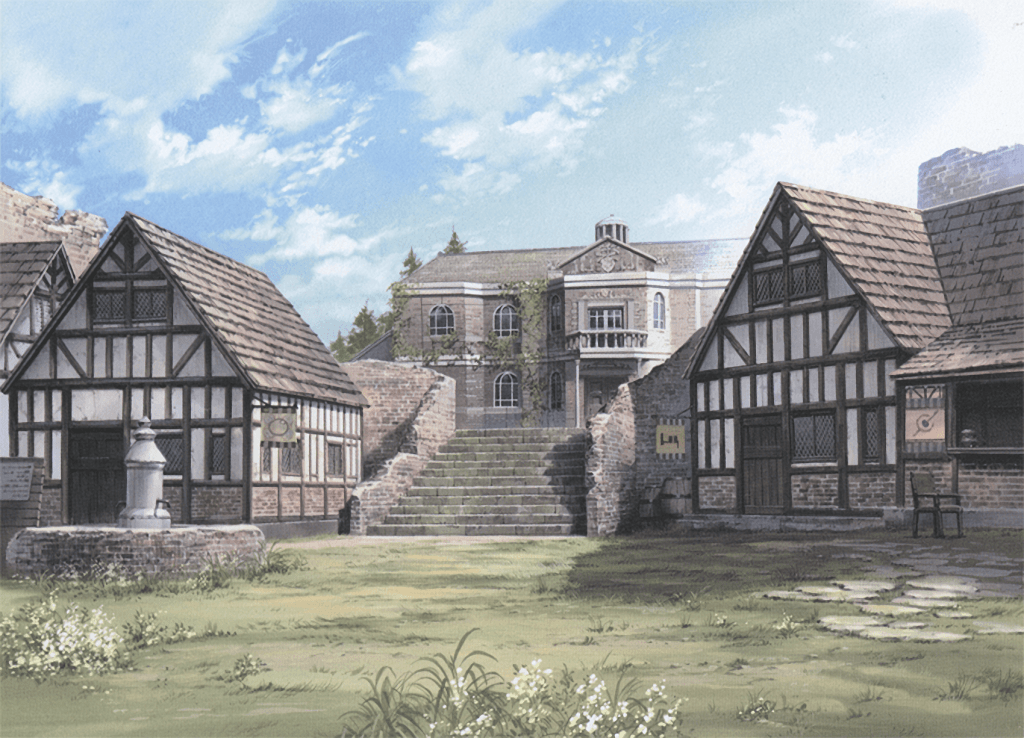
Budehuc’s history is shown in its crumbling rock barriers and wall-covering ivy. The outside grounds have a few old buildings, like the lottery stand, an elaborate tent, as well as a small inn. The place is isolated on the top of a cliff side, far enough away from the neighboring Zexen and Grassland tribes, which implies that this was intentional for the sake of trade. Each floor has an impassable door, which a modern person would interpret as an elevator, and players of the previous Suikoden games would see as not out of place in the otherwise high fantasy setting. Suits of armor and wall tapestries lay unmoved among cobweb-covered books and boxes. The back wall of the bar and eating area has a stage. The castle even includes a jail floor, with one cell in particular appearing to have been opened by ripping the bars off.
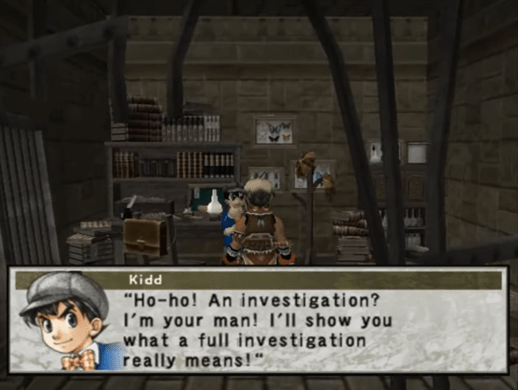 Not Conan Edogawa punk deciding he needs an entire jail cell to himself, while the giant griffin has to sleep outside.
The most impressive part is not seen in Budehuc castle’s front, but its back. First noticed through the demolished walls of the main mansion, a massive galley ship crashed into the building. With a gang plank extending into one of the basement floors, the dust covered stones and the immediate graveyard that surrounds it imply this accident left mortal damage instead of just property.
Budehuc castle being years away from its former glory is reflected in its inhabitants. Characters like Martha and Piccolo, are some of the oldest in the game’s overall cast, and look and speak of both the successful first Budehuc masterand the dozens of failed successors. The remaining old guard ironically does not include the actual castle guard, a tiny girl named Cecile. Commander of the Budehuc Guards, Cecile took over the position from her successful late father, continuing the castle’s focus on lineage and fall from past greatness. She even has a story about when she would ride the elevator as a child, up and down, before it stopped working. Cecile’s energy and ambition provide the foundation for Budehuc castle to attempt a return.
 If these walls could talk, they would scream.
The living conditions the people of Budehuc castle experience are more narrative than visual, with characters vocally lamenting the absence of visitors and customers more than complaining about the cobwebs and the cellars’ remaining food. The castle has an environment more akin to a dying mall than the last remains of an almost ghost town. Large plots of the castle grounds are empty, providing space for people to move in and, over the course of the game, literally build up shops. The emptiness of the areas around the castle hints at potentially “what might happen next”, with skeleton frames of houses and stores appearing as the game moves forward. Unusual for environmental story, Budehuc Castle is visited dozens of times instead of just once. When the new castle master, Thomas, arrives in an optional side story, the castle community starts to rebuild.
The castle’s original purpose, and one that it serves for most of the game, is one of commerce. As each of Sukidon’s III’s three (with Thomas acting as an optional 4th) protagonists send more and more shopkeepers and random weirdos to Budehuc Castle, and as the land rights legality is resolved, the place turns into a military fort. The peninsula cliff works as a natural defense, narrowing all conflict to the south side. By the time the protagonists finally take over and turn it into a base, just like in other Suikoden games, the castle has already been invaded and repelled multiple times.
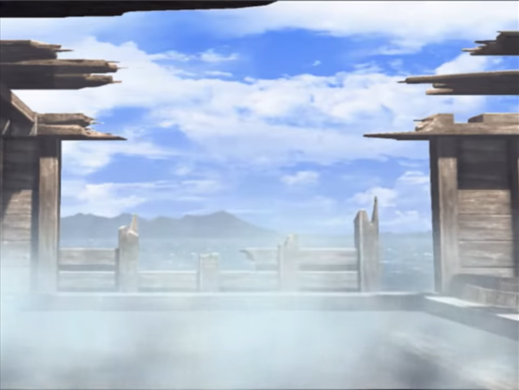 What happens to the galley ship, like how a cabin gets converted to a bathhouse, is rather clever.
Finally, the castle’s mood shifts. In the beginning, when there are so few people, it feels empty and almost abandoned. By the end of the game, the grounds are packed with people planting crops, running restaurants, or contemplating fighting their ninja clan rival. If Suikoden III had voice acting, it would be just as loud as the region’s harbor city or desert market town. Budehuc Castle feels more permanent than the past Suikoden headquarters, a living society over a necessary future relic. These physical details and illusions to past lives are why Budehuc Castle is the best Suikoden III character.
I did not know how to end this, so here is a video of Budehuc Castle remade as a Quake 3 map.
 Oddity Games

Leave a comment