

Regrettably, I have not only gotten into a new gacha game, but the game in question is by Chinese gacha powerhouse MiHoYo. Daily check-ins, obsessive stat building, and collecting silly artist alley tchotchkes of favorite characters are the fate that now awaits me. Since I don’t yet feel like subjecting myself through four plus years worth of material in Genshin Impact and Honkai: Star Rail doesn’t play nice with Linux without weird workarounds, I opted for MiHoYo’s recent game, Zenless Zone Zero. It turns out ZZZ is not only a solidly fun and colorful action game, but it’s also got surprising details in its environments and actively encourages the player to stop and look.
Eschewing the high fantasy open-world of Genshin Impact and the space opera turn-based RPG shenanigans of Honkai: Star Rail, Zenless Zone Zero opts for urban sci-fi mixed with fast-paced action RPG combat. ZZZ has more in common with Hoyo’s other ARPG, Honkai Impact 3rd, but with the option to play as men, furries, and furry men. The developers have noted that Digimon World and Street Fighter were major influences for the game’s setting and combat, respectively, while Evangelion inspired the game’s story. Curiously, the game’s mixture of sci-fi post-apocalyptic setting and presence of animal people evoked some comparisons to Arknights. ZZZ in general is more upbeat (some occasional dark moments notwithstanding) making it the “sunglasses-and-thumbs-up nothing in life matters!” to Arknights holding its head in its hands while groaning that nothing in life matters.

The major recurring theme in ZZZ (to the point where it’s repeated in the game’s marketing taglines) is humanity rebuilding anew in the aftermath of disaster within the city of New Eridu. The disaster in question involved aliens opening up pocket dimensions, and people subsequently fighting said aliens and exploring said pocket dimensions. This setup would theoretically bring to mind a grittier environment, like a less intense Death Stranding with massive abandoned areas and survivors banding together in bunkers. ZZZ instead feels more like a Persona game, focused on living in and exploring a sprawling city. Sure, the game still has a military outpost and hints at the destruction brought on by unfortunate events, but people are also going shopping, watching movies, and living out their everyday lives.
Sixth Street, the starting area, has facilities for purchasing/crafting character equipment, topping up the timed stamina system, and playing minigames. However, the facilities aren’t simply generic sci-fi weapon terminals and item shops run by gruff soldiers. Instead, the protagonist can pop into the local coffee shop for a stamina boost, head to the record store to craft stat-boosting components, and swing by the convenience store to purchase items from the Bangboo (little bunny robot) employees. There’s a retrofuturist bent to the game’s overall aesthetic, with the usage of VHS tapes and CRT televisions amongst the people using smartphones and laptops. This aesthetic blend is justified by certain in-game lore noting that extensive ‘modern’ technology is prone to corruption from the Ether energy source used throughout the setting. To loosely quote someone from one of my Discord servers, ZZZ could’ve been boring and made everything a menu, but actually exploring Sixth Street and walking to shops adds a certain level of immersion. It helps that the player can interact with the various feral cats sprinkled in the backstreets or attempt to answer the local payphone for an unusual conversation.
The sibling protagonists of the game run a VHS rental shop, which can be used to obtain extra currency and upgrade items. There’s a hella lot of detail put into the cover design and plot description of the fictional films the protagonist can recommend for the day, adding more of a sim element to a small mechanic. The protagonists also have unique bedrooms on the second floor, reflecting their personalities: Wise, the straitlaced brother, has a tidier and organized room, down to folding his blanket over as if in a hotel, while Belle, the carefree sister, has a room slightly more akin to “damn bitch, you live like this?”, with her belongings more scattered about and her bed in disarray. During active story events, the player often has to manually return to the bedroom and rest in bed to end the day, which adds to the game’s life sim elements.
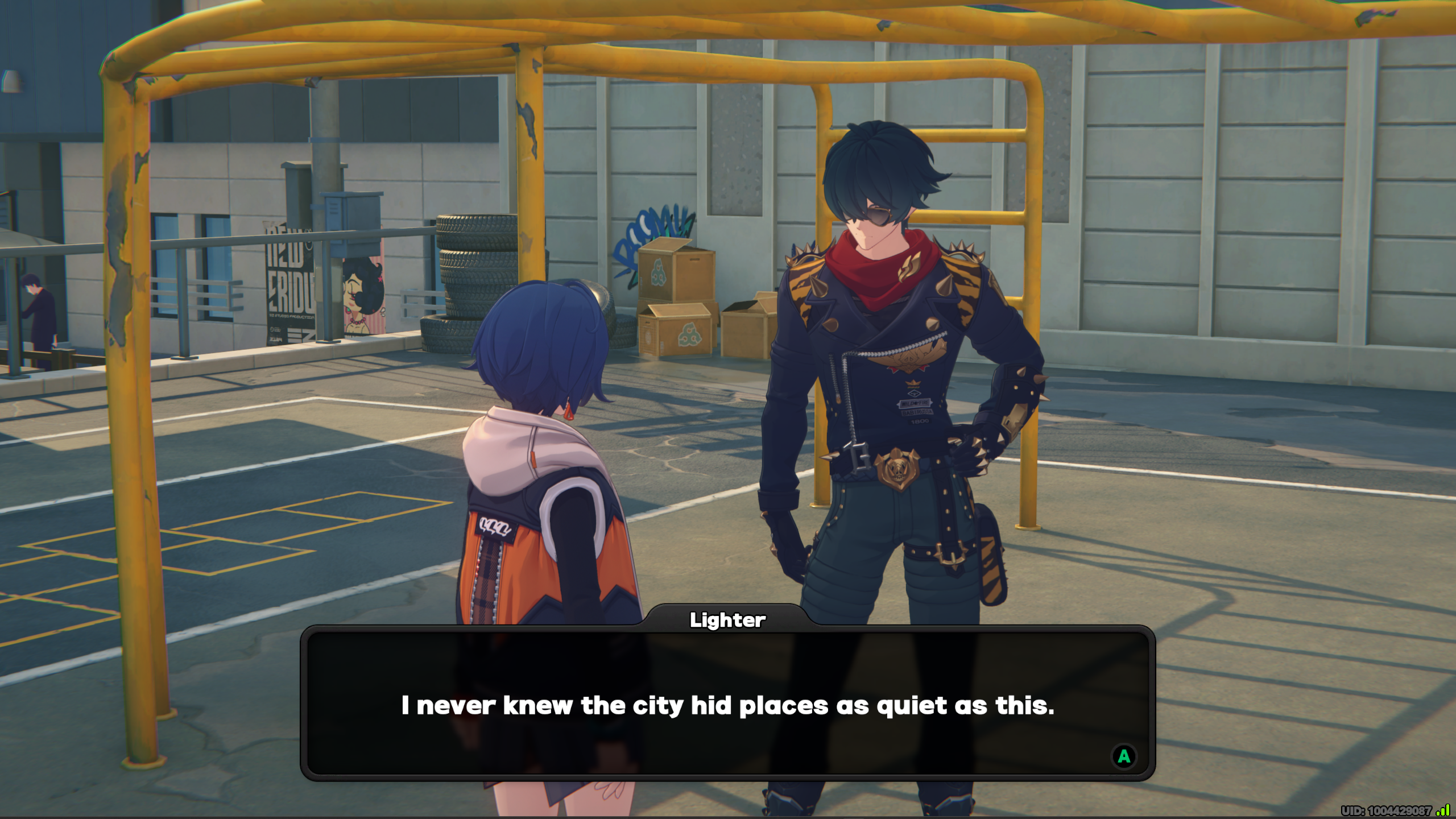
Lumina Square is the major central city area and the largest locale in the game so far. Hosting several of the same shops from Sixth Street, Lumina Square is also big enough to host some of the game’s side events, like assisting one of the video shop’s workers with her own item kiosk or running a sandwich food truck. Notably, it’s also a major area for many of the obtained gacha characters to hang around for trust events that dig more into their personalities. A nice touch with the game’s trust events is integrating specific locations within the area into the events – for example, meeting wolf butler Von Lycaon outside of the Square’s theater to catch a movie with him or hanging out with “wears sunglasses at night” biker Lighter by the bayside playground for him to teach the protagonist how to do pull-ups. The expansiveness of Lumina Square is similar to Kamurocho in Yakuza, albeit without random thugs and drunk businessmen picking fights with the player every 10 minutes. This area is so detailed it’s hard to believe it isn’t explicitly modeled after any particular real-world location.
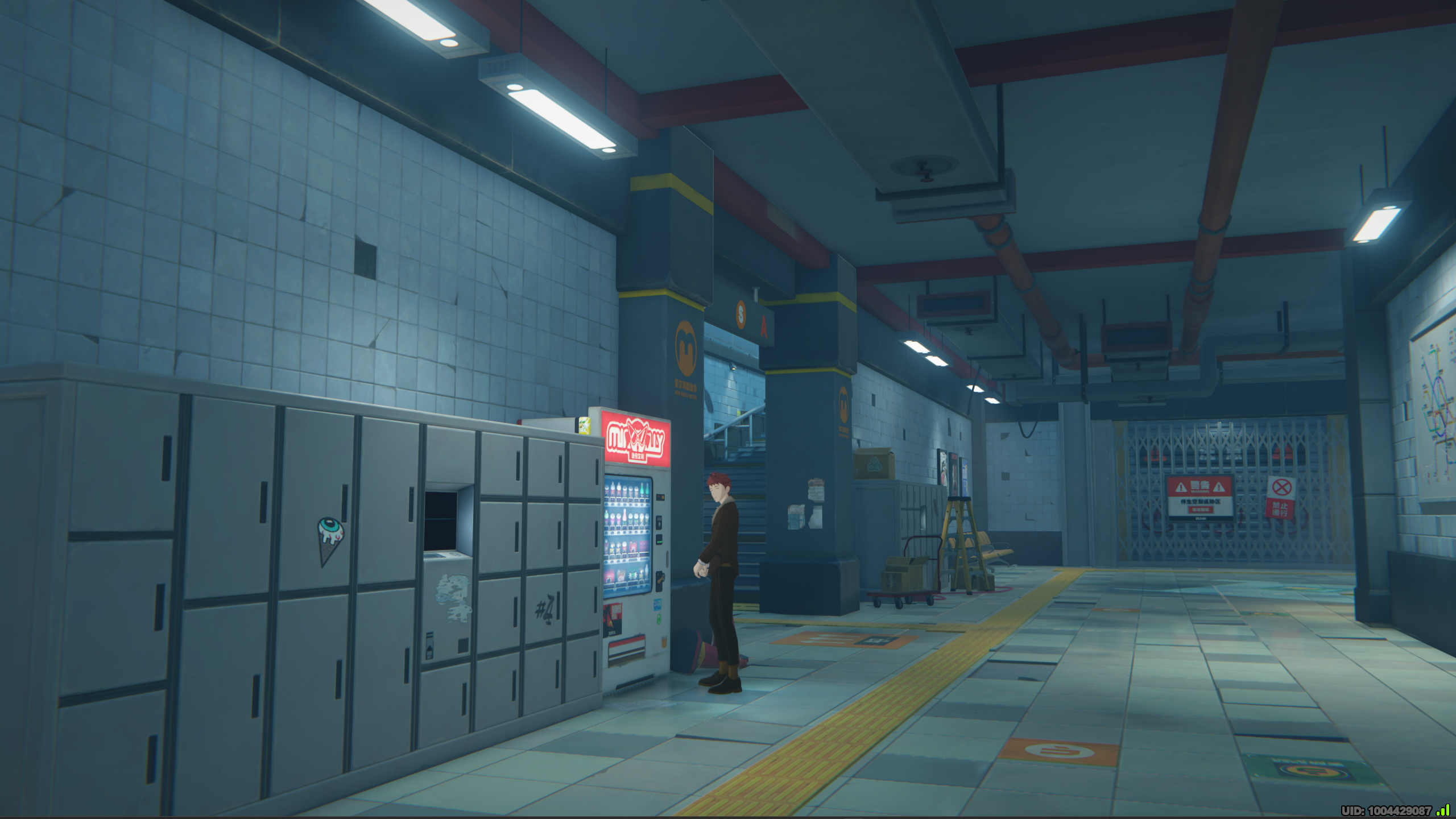
To remind the player of the post-apocalyptic events the setting is mired within, the smaller Ballet Twins Road area affords the player a front seat view of Hollow Zero, the massive pocket dimension at the edge of engulfing the city and subject of the game’s roguelike mode. Ballet Twins Road is noticeably more beaten down compared to Lumina Square and Sixth Street, with a crashed mini electric vehicle embedded in the upper floor’s safety railing, exposed wiring sparking on the ground, smashed glass on the subway map display, and graffiti on the walls. The soundtrack even employs a rather melancholic piano tune in the background. Appropriately, this location also involves several quests involving ghosts or purported hauntings. Ballet Twins Road upholds the darker elements of the game’s setting, albeit in a subtler and more restrained manner as opposed to making every area look similar to it.
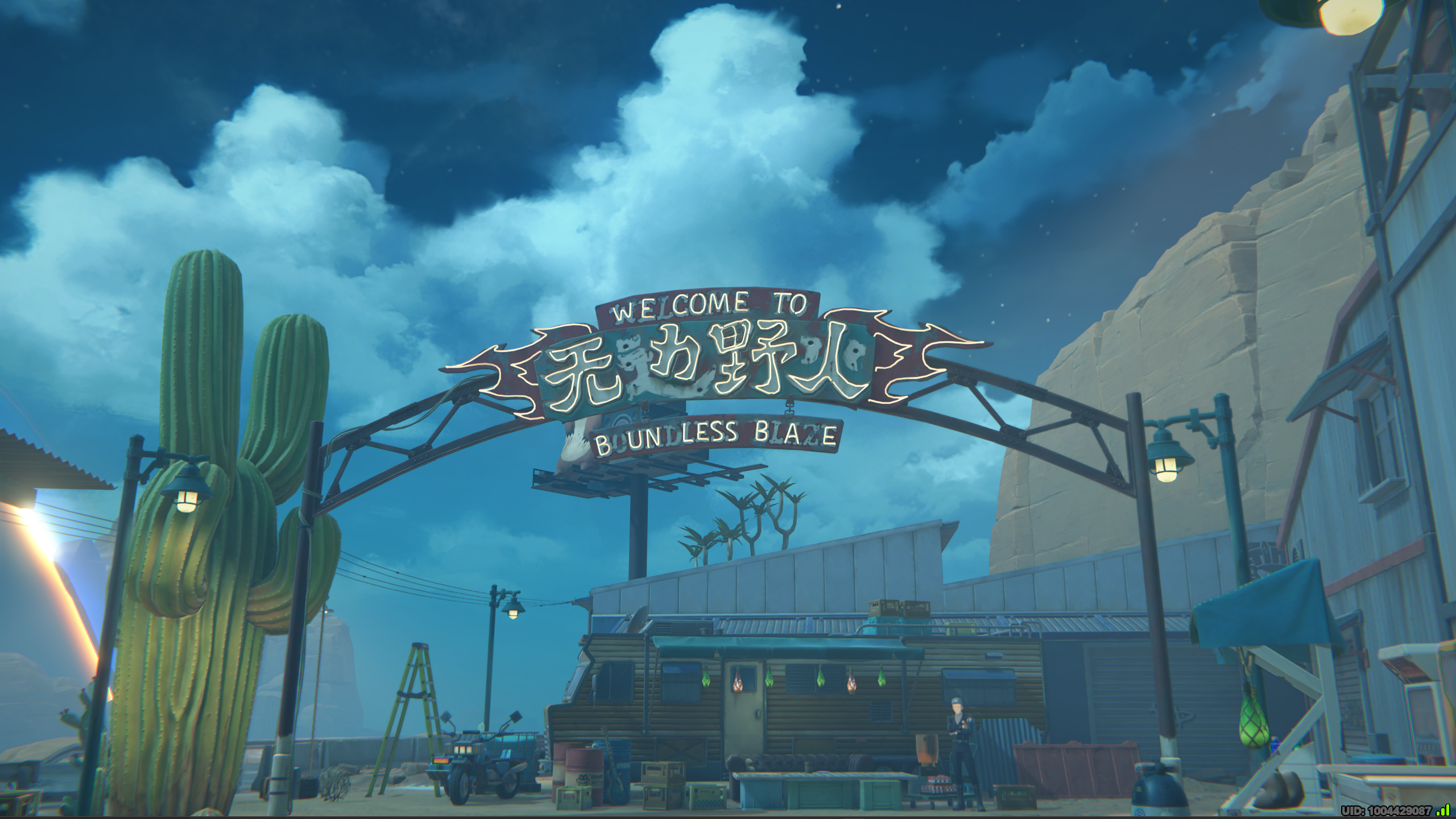
On the outskirts of New Eridu lies Blazewood, the deliberately rustic desert town inhabited by the game’s Mad Max-esque friendly biker gang. In contrast to the retrofuturist elements of Sixth Street and Lumina Square, Blazewood resembles a stereotypical Wild West-style town, complete with tumbleweeds, cacti, and a lot of beat-up couches sitting outside. The lower tech in Blazewood is emphasized by the town’s elevator being a manual lift activated by a Bangboo whose entire job is to pull a lever. The town’s “convenience store” Bangboos are barely functioning automatons painted to look like Bangboos. Hell, there’s also a busted neon welcome sign near the town’s entrance that spells out something different when it’s illuminated at night. Appropriately enough, one of the major post-story quests in Blazewood involves rebuilding its restaurant, Cheesetopia. Over time, the player can get Cheesetopia from looking like a barebones derelict building to a roughshod-but-functional dive eatery.
ZZZ structures itself to get the player to actually look around and explore. The player can collect currency called HIA coins, which can be obtained from talking to certain people and possibly doing small favors for them. The coins can then be exchanged for items with an NPC who literally lives in a trash can and is aptly named ‘sage in a barrel’. Talking with the variety of NPCs in different areas is highly encouraged, as many of them will give quests to be completed through Hollow exploration. Quite a few NPC’s, without indications from the UI, may also give the player rewards simply for chatting with them. There are even quests that don’t involve the game’s combat systems at all, such as assisting a couple of high schoolers with wrangling a feisty cat or taking photos of local stores for a social media influencer. Did I mention the game has a function that lets you take photos, including selfies, using the protagonist’s phone? The local police officer dressed in a mascot suit will even give you rewards for helping out the locals.
As someone whose previous gacha experiences were largely limited to menu-heavy navigation and drab turn-based combat, Zenless Zone Zero feels premium in comparison. Yes, it is still a gacha game at its core, predatory gambling nature and all, but it offers a unique cast of characters, fun gameplay, and an expansive setting that’s genuinely fun to explore. At times, I’m almost sad that this is a gacha game when it could make for a very solid console game instead. Nonetheless, ZZZ has its hooks in me with its comfy apocalypse.
 Oddity Games
Leave a comment