
The Ashen Wolves are amazing characters, both as individuals and then as a functioning group. Each one has the depth to carry their own side-story. Balthus is a larger-than-life gambling vagabond who borrows money and has more bounty hits on his head than fingers and toes. He’s childhood best friends with Holst, the famous military general of Golden Deer’s Hilda, and is literally a mid-20 something who until recently, attended a fantasy high school. He has a running gag where he self-proclaims himself as X King of Grappling, ranging from Magnanimous and Indomitable, to even Twinkle-toed. Balthus even fights big with his family’s heirloom, massive golden dragon gauntlets. He’s a physically imposing big-brother figure with the smile of a happy child.
Constance is the group’s dainty royalty mixed with the mind of a mad scientist. To restore her family, House Nuvelle, to former glory, Constance is fixated on doing magic research deep in the Abyss, testing symbols that are often followed by explosions. With a personality where the term ‘haute confidence’ is most appropriate, Constance talks with cutting directness, often punctuating her statements with a fan. She even does the oujo-sama laugh, a character trope that I never tire of. To contrast her smug confidence is the potentially ableist inclusion of her personality disorder. More akin to seasonal depression than bipolar disorder, Constance does an emotional 180 when exposed to the sun, becoming someone who feels like a walking burden. Because the personality swap is more an emotional range than a definitive identity, with the whole sun being an emotional switch, it’s more troubling than outright harmful. To be less serious, Constance can cast lightning magic from the other side of the map while flying a Pegasus, which is how Constance demonstrates that she is worthy of admiration and respect.
Hapi might be the least developed out of the four, going as far as to not even get a last name, but Hapi is…Hapi. A sleepy smartass that covers up her past life as a research subject. A person whose ability to summon monsters when she sighs has turned her from a helpless orphan to a walking curse. This leads Hapi to come off as passive and uncaring to a given situation, no matter the severity. Her use of nicknames is probably her defining trait, a personal and rather casual way of speaking that is juxtaposed against her otherwise dry emotions. Hapi’s imprisonment by the church is the strongest example of a shared Wolves motif, which will be elaborated on later. She’s a constant reminder of the growth people who have experienced deep trauma and violence can have. On black horseback, Hapi fights with dark magic.
Yuri is not only the cunning leader of the Ashen Wolves, but also the violent de-facto leader of countless mercenaries and bandits in the Abyss. He’s also short and wears pretty light purple eyeliner that the game makes material by giving him a make-up brush as a lost item. A man of contradictions with the honor of a man three times his age, Yuri is a pretty mask that covers up a devil’s sneer. Yuri is not even his real name, as this is a young man who demands loyalty but hides even his real name from his colleagues. To match his scheming, Yuri fights as an assassin…but like, a really good assassin.

After beating The Cindered Shadows, these four are allowed to be recruited in the main campaign, where they soon replaced half my army. A strength the Ashen Wolves have over other Fire Emblem characters is that they are immediately cool and engaging instead of through Stockholm or very gradual character developments. For instance, Hilda Goneril is easily the best Golden Deer student, but it takes dozens of hours for her to turn from unmotivated delegator to hardworking protector. The Ashen Wolves work as a four-person unit, because history is filled with classic four-person dynamics. I rewatched an ancient Cracked Afterhours video for this article because I remembered its discussion of four-person friend groups, like Teenage Mutant Ninja Turtles or Seinfeld, and how each one fits an archetype. They expanded on how this dynamic goes back to the four Temperaments: Sanguine, Choleric, Phlegmatic, and Melancholic, which lead me to a rabbit hole about how many ancient cultures used the four elements of Earth, Wind, Water, and Fire.

A modern and easier to grasp example of the importance of teams of four can be seen in the It’s Always Sunny in Philadelphia episode “The Gang Solves the Gas Crisis” where Mac realizes that things are going wrong because Frank was not there to complete the gang’s Muscles, Looks, Brains, and Wildcard dynamic. My personal favorite is the Out of Your Friends meme that includes Дpyг. The Ashen Wolves fit many of these roles and will often trade between each other.
What unifies the Ashen Wolves is the bond of not only being in the same House and fitting this four-person dynamic, but of all of them being prisoners. Each member wears chains on their uniform, and their house colors are grey and silver, common “chain gang” prisoner colors. They live/hide physically underneath royalty and nobles and are either running away from mercenaries/debtors/the law or have experienced, in the case of Hapi, actual incarceration. Their theme song is literally called Shackled Wolves. The Ashen Wolves are so compelling because while they have their own Stockholm with the Abyss, they know there are vulnerable people living there that need to be protected because they see the Abyss as an escape.
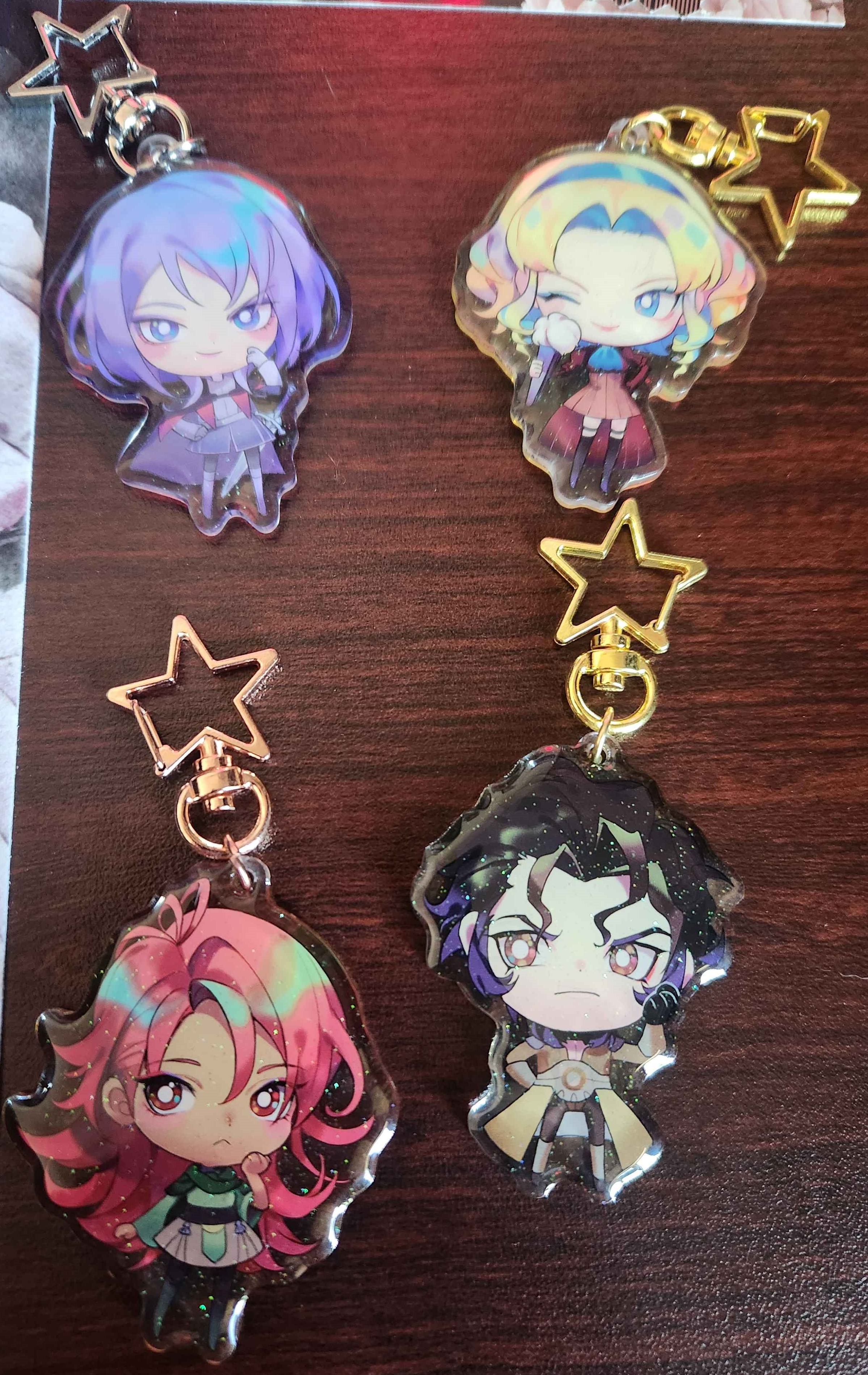
Later Fire Emblem continues the premise that many of the players are here to watch likable characters bicker and flirt with each other, but this sentiment has, until the Ashen Wolves, perplexed me. Groups of outsiders cast out of the deeply rigid and lineage-controlled society, as is the noble heavy world of Fire Emblem, are by their existence from the norm, interesting. During the second half of the game and into the time skip, each member of the Ashen Wolves has chosen their own distinctly colored outfits; because what keeps these four connected is not their positions or what they wear, but the shared companionship they developed and continue to maintain. And for games that are so focused on the power of comrade, theirs feels the most genuine. They are good kids.
 Oddity Games
Leave a comment