
Rainy Day is a wholesome and nostalgic adventure game about the toils of trying to find something to do as a bored child. While I didn’t grow up in this time period, I could relate to the struggles of finding ways to entertain myself in a time before I had access to unregulated videogame and internet time. The boy can clean his room, help his mom with chores, play with Transformers figures with his brother, and use the family’s Commodore 64, complete with a Space Invaders minigame. The boy’s interactions with his family members are genuinely sweet, and the game captures the essence of childlike wonder and imagination from simple play. Swarr’s webcomic makes heavy use of bright orange, yellow, and dark blue tones, which was carried over to the palette used in the game. I also enjoyed Swarr’s late 90’s/early 2000’s stylized cartoon character designs. Rainy Day is a unique take on the GB Studio adventure game, showing a more personal side of the sub-genre. Protip: the game has a surprise for you if you 100% it.
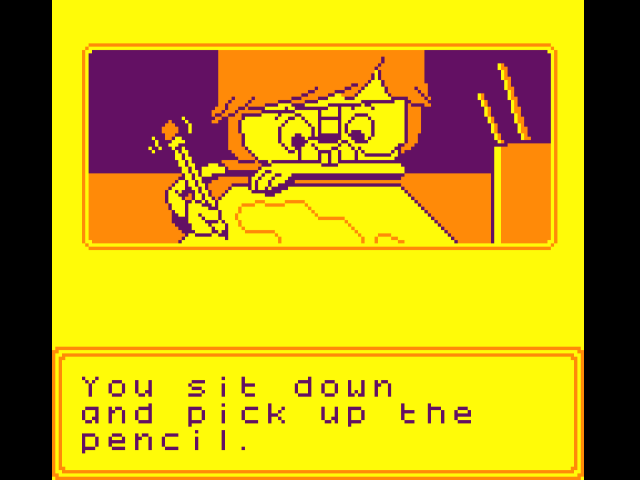
Life in the Analog Age: Rainy Day can be downloaded from Gabe Swarr’s itch.io page. The domain for Swarr’s webcomic appears to be down, but he has uploaded animated versions of the comic to YouTube.
Yurivania 1: Uhaul of the Night
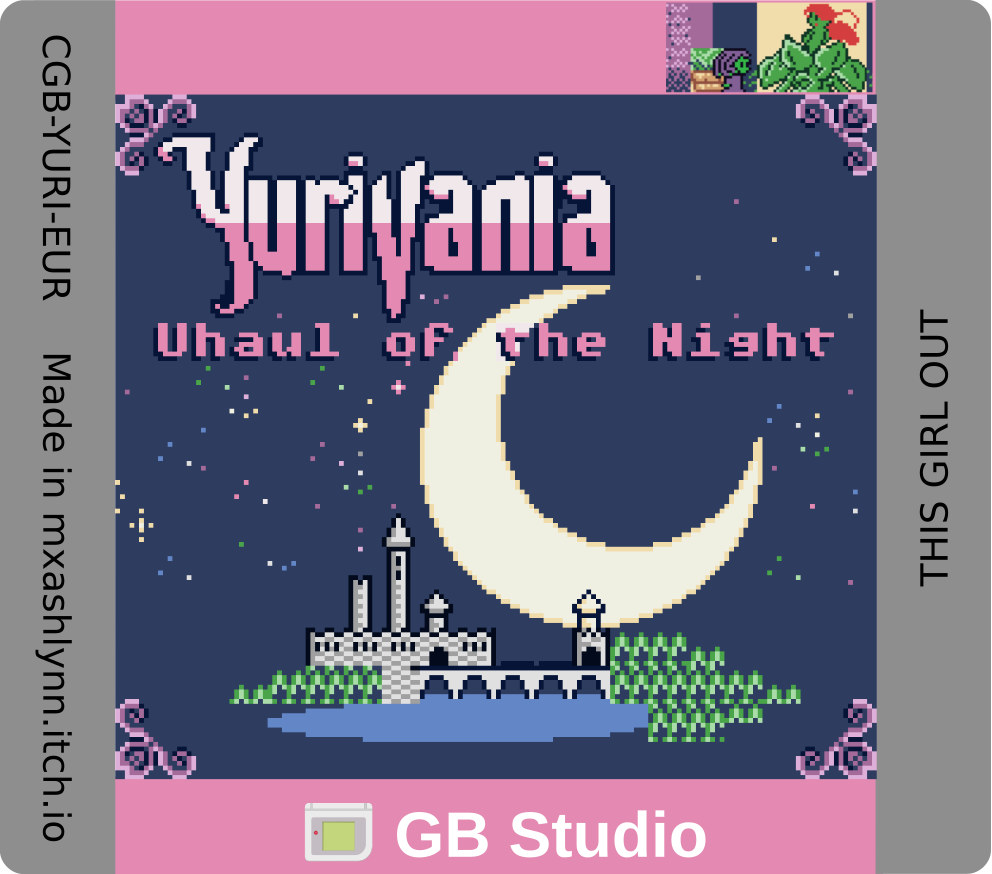
Yurivania 1: Uhaul of the Night is a platformer adventure game created by developer MxAshlynn. MxAshlynn has also contributed to various games, such as 2064: Read Only Memories, Later Daters, and LongStory. Additionally, the developer has created 2 additional Yurivania games and a prequel for itch.io game jams. Yurivania 1 follows the adventures of Stheno, a gorgon, preparing to ask her plantgirl girlfriend, Alraune, to move in with her and subsequently preparing her room for optimal plantgirl living conditions. Stheno must traverse the Midnight Castle, the gigantic palace home to a variety of monster girls.
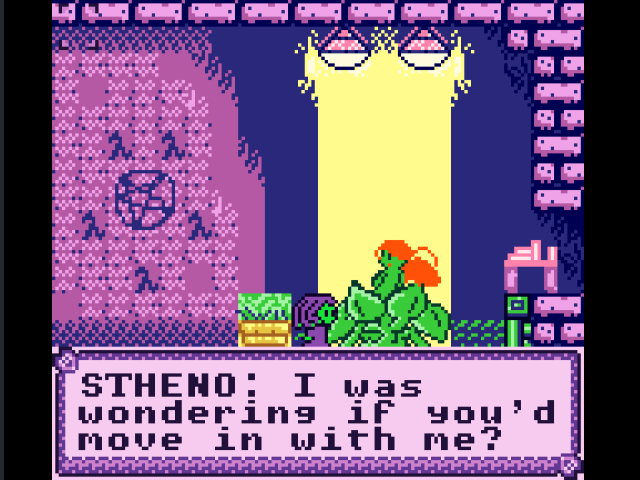
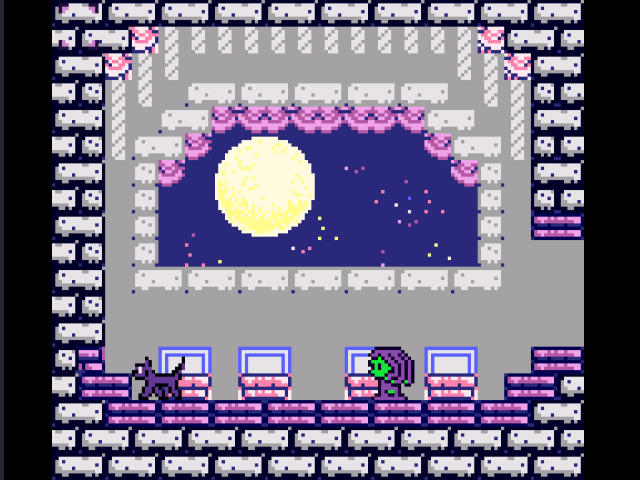
Yurivania is, well, a metroidvania…with yuri elements. The overall game is cute and full of character lore, to the point where there’s a dedicated section of the status menu to explain individual characters’ backstories and relationships. Stheno’s interactions with the various denizens of the Midnight Castle are especially charming, ranging from undergoing preparatory training for overseeing a demonic ritual, enjoying a romp with a mermaid girl in her polycule, or assisting the skeleton guardswoman with fending off a pesky human. The game is pretty simplistic in its metroidvania elements, isn’t especially punishing for someone allergic to platforming, (like me) and the overall map is pretty easy to navigate. It was especially fun to collect items to unlock new areas to explore and chat with the variety of monster girls peppered around the Midnight Castle. Yurivania 1 is a nice little combo of metroidvania and adventure game with a neat take on monster girls.
Yurivania 1: Uhaul of the Night can be downloaded from MxAshlynn’s itch.io page.
Battle Dice Paradise

Battle Dice Paradise is a dice battler developed by Harley Wilson. Wilson is a UK-based Senior Lighting Artist at Ubisoft. While passing by their local game shop, the unnamed protagonist notices the shop has the hottest new game in town. The game is a tournament-style dice “deck” builder, in a similar vein to the Pokemon TCG games or the Card Fighters Clash NeoGeo Pocket series. Incidentally, this isn’t the first time Wilson has dabbled in this genre, as he has been working on a series of PC games called Bumpers and Broadswords, which he touts as a combination of Yu-Gi-Oh! and Beyblade. Said games even maintain a GBC-aesthetic too.

Battle Dice Paradise has the player build a “deck” of 6 dice with different attributes – there’s straightforward attacks, guarding, and healing, plus varying status effects. Battles are automatic RNG affairs, wherein the players alternate dice rolls, activate the face effect, wash, rinse, and repeat until one player loses all of their health. Victories net the player money to purchase new dice booster packs from the game shop. While I have minimal experience with CCG deckbuilders, Battle Dice Paradise seems to boil down those types of games to their purest essence: the satisfaction of crafting synergistic decks to beat opponents in a tournament format. By nature, the battles are very luck-based (I’ve been able to crush people in 2 turns and also had my ass handed to me last second thanks to some status effects) and there doesn’t seem to be a ‘win’ state beyond reaching the highest rank. Still, Battle Dice Paradise had me legitimately entranced during a lunch break and bus commute home, and it’s a good example of what a solo dev is capable of with Gameboy homebrew.

(Author’s addendum: a couple of months after writing this article, Wilson revamped his itch.io page significantly and delisted Battle Dice Paradise, so the game is no longer available for download. He has replaced the game with a sequel/updated version called Battle Dice World)
Soul Void
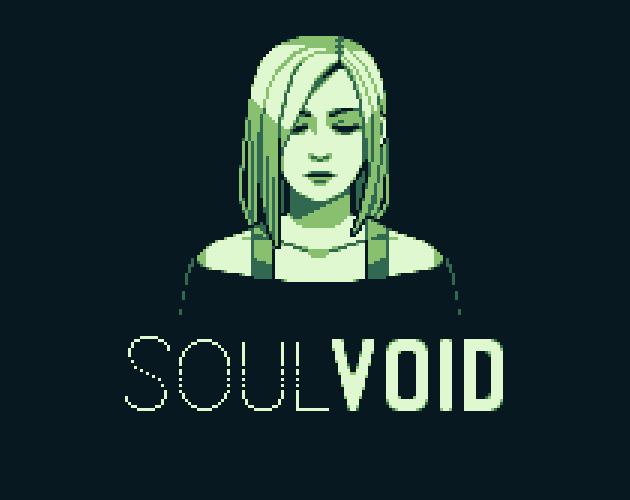
Soul Void is a horror adventure game developed by Kadabura. Kadabura is an artist and writer whose works evoke horror and dark fantasy elements. Soul Void focuses on an unnamed woman who finds herself in the “soul void”, a bizarre puragatorial space populated by various lost souls. Many of the soul void’s denizens are haunted individuals tormented by a strange grinning being known as The Grim. To make matters worse, many of these souls are trapped in an insanity fugue state, slowly being changed into monstrous forms, or some combination of both. As the protagonist travels through the soul void, seeking a way out, she can assist many of these individuals with little tasks and much-needed conversation.

Soul Void is one of the most graphically impressive GB Studio adventure games on this list, thanks to Kadabura’s unsettling and delightfully creepy body horror artwork. Because of the ‘redux’ update, the game also has a more varied color palette, which works effectively in the more visceral locations of the game. There’s some definite influence from certain RPGMaker surreal horror games, like OFF and Yume Nikki, yet the developer still has a unique execution with the concept. Most importantly, underneath the horror visuals, the game has heart – without spoiling too much, there’s a recurring theme of seeking hope by reaching self-acceptance. As whole, Soul Void is simply a great take on a GB adventure game that is significantly uplifted by its themes and visuals and it’s surprisingly impactful enough that I found the game stuck with me.

Soul Void can be downloaded from Kadabura’s itch.io page.
Cargo
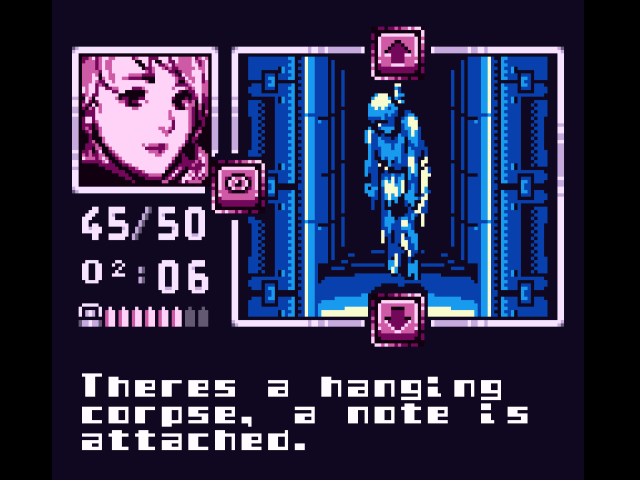
Cargo is a survival-horror game created by horatiu.nyc. Horatiu is a prolific GB Studio developer who has created a number of other GB Studio games, such as the dark fantasy dungeon crawler Traumatarium and horror games Bitterroot and Neighbor. Cargo is a first-person sci-fi/horror game, focused on a space mercenary exploring a seemingly-abandoned ship. The player must carefully manage their health and oxygen as well as ammunition with limited resources. Per usual survival horror strategies, the player doesn’t necessarily have to fight every enemy encounter and can gamble on simply running away.

My experience with Cargo was brief but fascinating. I couldn’t tell if I was simply very lucky or if the game was bugging out, but I never ran out of resources, which made the game easier than expected. Nonetheless, Cargo was still pretty cool for such a short game. The graphics and interface are really polished, and the mix of first-person view displaying the UI for the protagonist’s stats were evocative of PC-98 adventure games. Even the dialogue sequences, portrayed in a visual novel-esque manner, have attractive character portraits. The environment on the ship is suitably creepy and the game does a good job evoking a sense of dread when a monster is encountered. The story is a bit anticlimactic, but the overall unique take on a survival horror game within GB Studio’s limited parameters is impressive.
Cargo can be downloaded from horatiu.nyc’s itch.io page.
 Oddity Games
Leave a comment