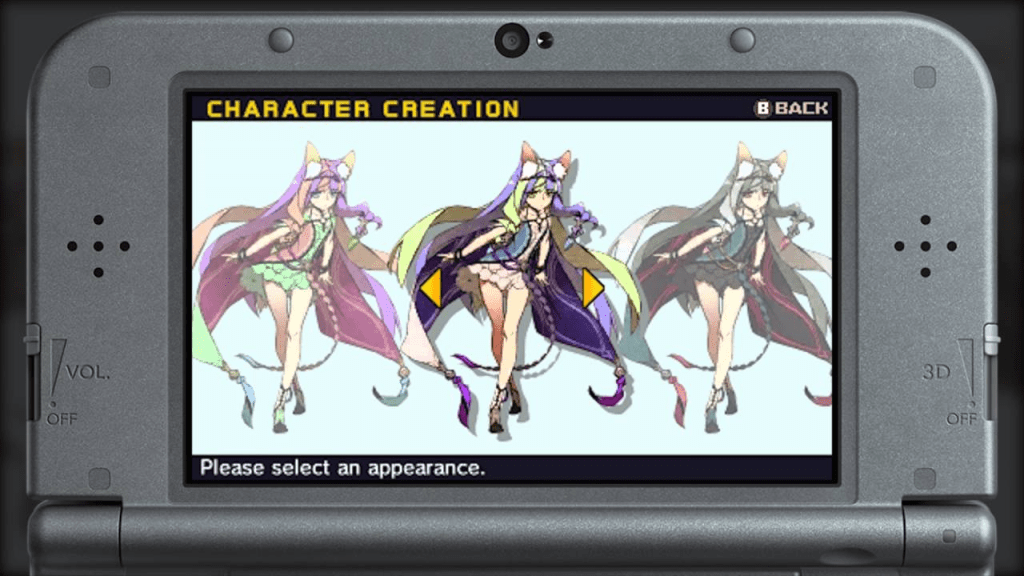

In Etrian Odyssey, a series of dungeon RPGs (DRPGs) modeled after old-school DRPGs like Wizardry, the party members are created by selecting portraits and job classes (later games added voice acting) by the player, but since the games use a first-person view, the characters generally aren’t seen outside of menus. I haven’t played an EO game besides the loose Persona Q spin-off (whose selling point is getting to play and watch pre-established characters from different games interact), but to my knowledge, EO games are generally focused more on exploring and conquering dungeons, over deep characterization. In an article from the developers of EO, they encourage players to use their imagination to give personality to the party members. The EO devs seem to be describing a form of “passive” role playing in their article; noting that players might imagine their party members to have specific personality quirks or react to situations in particular ways. It’s an interesting extraneous way to engage with a game that otherwise has silent characters.
For the purpose of this article, I’m defining “passive roleplaying” similar to what the EO devs said: consciously (or maybe subconsciously) imagining elements of personality and reactions to situations onto otherwise silent characters. Regarding the “passive” descriptor, I’m focusing on the roleplaying element as an improvisational aspect, but not discounting the idea of players coming in with a pre-existing character and letting ideas change organically as they progress. Also, this article mostly discusses my personal experiences with passive roleplaying; your mileage and adventures may vary.
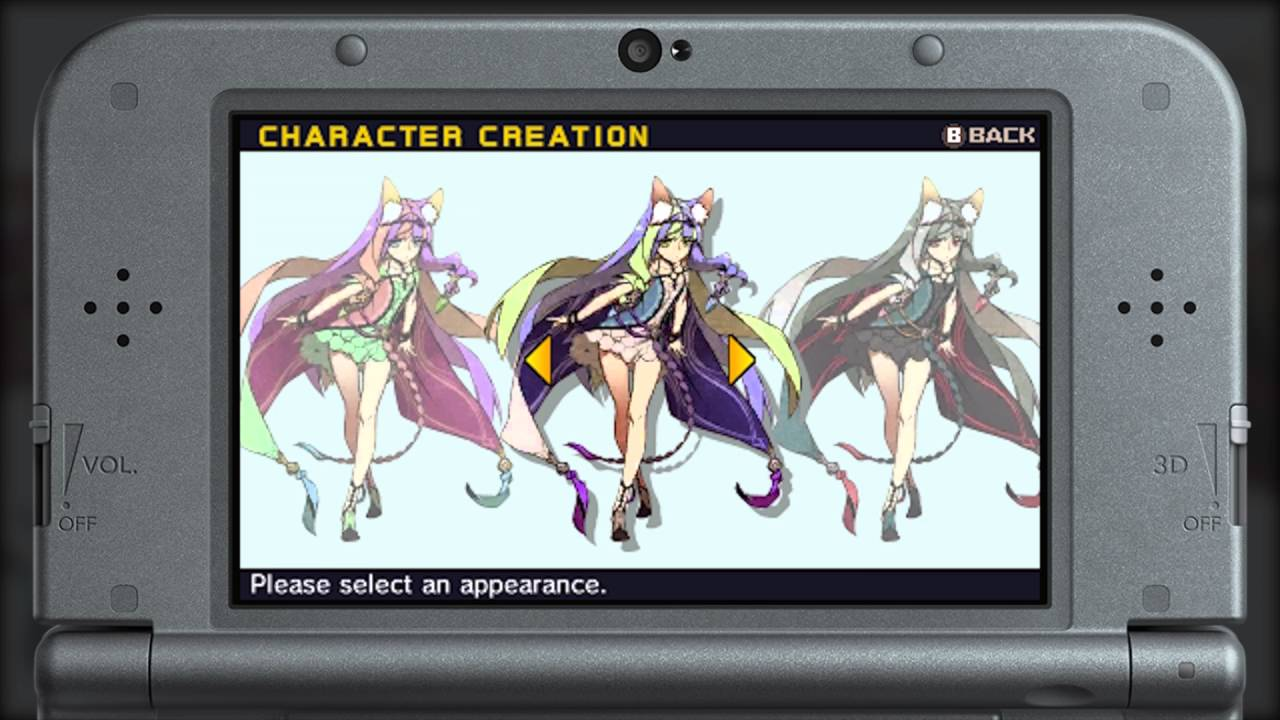
Since EO games are too hardcore for me, my closest equivalent was probably 7th Dragon III: Code VFD. Similar to EO, the 7th Dragon games allow players to select portraits for their characters, with the added bonus of choosing specific Japanese voice actors as well. The characters also have actual 3D models while attacking, rather than simply being static portraits. While I’ve only played 7th Dragon III, there’s a general consensus in my research that the player largely controls teams of silent characters for dungeon crawling and saving the world from apocalypse-causing dragon purposes. Since the cast of 7th Dragon III hail from different time periods (long story), I imagined it caused some interesting interactions between my party members. For example, since the game takes place in a future post-apocalyptic version of Japan, my party members from the past were smitten with the modern amenities, particularly the cat cafe. Meanwhile the “future” era characters were more no-nonsense and focused on preventing the more immediate world-ending threats. Passively roleplaying with my party members in 7th Dragon was an added bonus that added unexpected investment in the game’s plot and gameplay progress.
Games with silent protagonists tend to be uneven for passive roleplaying. Games where I can build the protagonist from the ground-up, like in Freedom Wars or God Eater, are optimal. Somehow, I was able to extrapolate personalities and back stories for my various protagonists solely based on the voice packs I chose. On the other hand, silent protagonists in games like the Persona games don’t really tend to lend themselves well to passive roleplaying. In the Persona games (specifically 3–5), certain dialogue options seem to hint at existing pre-defined personality traits for the protagonist. The best example would be the male Persona 3 protagonist versus the female MC from Portable. The male protag is more passive and sleepy, while the female protag is more outgoing and cheerful. As far as my preferences, I would rather have more control to create the protagonist for a more optimal passive roleplaying experience.

Sometimes having a player-created main cast works against the game’s favors. The aforementioned EO example works better given its DRPG influences. Old-school DRPGs tended to be gameplay focused, rather than character-focused, opening a wider opportunity for player imagination. In a game series that usually has established party members, like Dragon Quest, taking away the party’s personality ends up being more distracting. Dragon Quest IX, which allows the player to not only create a custom hero, but the three other party members as well. I play DQ games for the unique party members, ranging from Alena, the Russian martial-arts princess from IV, to Yangus, the gruff former-thief-turned-best-buddy from VIII. Having a silent protagonist in these games is one thing, but a silent PARTY is…strange. IX does have some interesting NPC’s and gives the player a sassy gyaru fairy to act as a “voice”, but the experience left me uninvested and missing the party banter. I recall seeing plenty of people on Tumblr circa 2016 (when I originally played IX) who loved the game for the opportunity to create a full RPG team of original characters, so it seemed to have connected with other players.
CRPGs tend to be more difficult for opportunities for passive role-playing. The biggest problem in these games is that it’s difficult to portray the protagonist with a wide range of personalities, and instead the game has to use morality for differentiation. For example, Commander Shepherd in Mass Effect is a fairly upstanding person who may or not be kind of a space-racist dickhead while trying to save the universe from ancient galactic evils. Most of the dialogue options from Mass Effect affect how cold Shepherd might be to people in general, but don’t majorly affect their personality at the end of the day. A similar issue appears in The Outer Worlds. The protagonist, The Stranger, can be more empathetic to the plights of the capitalist corporation-trodden denizens of space, or they can murder NPCs left and right without remorse. The Outer Worlds does account for a more villainous playthrough, complete with unique quests and a separate (bad) ending should one decide to betray the game’s helpful overseeing doctor and side with the corporate overlords, but I still don’t feel the game as whole is conducive to passive roleplaying.

Even Divinity: Original Sin II, with its origins in Dungeons and Dragons, didn’t feel open to passive roleplaying. A significant contributor was me playing the game co-op with three other people and we cared more about progressing through the game and trying to avoid setting everything on literal fire in combat. My character was loosely based on my existing DnD character and existed mostly to pass the game’s obnoxiously high Persuasion checks, but it didn’t really feel like my character had much of a personality otherwise. Sure, my character was spec’ed into the Jester personality, but that just means she made bad puns on occasions to NPCs in order to progress. Likewise, while I tended to play my West of Loathing character with a sociopathic streak, it didn’t feel like I was roleplaying a separate person. Sure, NPCs would react to my occasional feats of brutality, but ultimately my vengeance-focused partner had more personality.
Passive roleplaying is ultimately a condiment to me – not always necessary to enjoy the main meal, but if it enhances the dish, it’s pleasant. It doesn’t always work in every instance, but it’s not like I need to utilize it all the time. I’m glad that the EO devs defined a concept I’ve been engaging with for years, but it’s interesting to see the idea articulated and explored as a universal concept.
 Oddity Games
Leave a comment